The Sweet Collapse

3745615207_31c18bc97b_b

There is a taste I associate with Sunday more than any other.

It is not the dry bread on my tongue, or the burn of red wine on an empty stomach. Those bits of sustenance I reserve for a different category, one of feeling rather than taste. No, to me the taste of Sunday must be soft, round, and sugar glazed.

As kids, we traipsed through the aisles of the local Food Lion after Sunday morning mass, waving at the other parishioners we had seen only minutes before and ignoring our mother’s warning to not ask for anything. We would stop and stare at the display of donuts, eyeing the garish sprinkles and the drips of chocolate glaze landing on the parchment paper below.

On road trips, my mother always had one eye out for a bakery. It had to be the right type, of course, a quaint place boasting artisanal delicacies and old men who sit at their designated tables to read the paper and sip black coffee day after day. Here we found sticky delights filled with homemade raspberry jelly.

In the summer, my sisters and I would retreat to my grandparent’s house for a week at a time, where we would find a pantry filled with cartoon covered boxes of cereal and Little Debbie donut sticks. The sugar stuck to the roof of my mouth for the entire week as we played dress up in my grandmother’s clothes and rode roller coasters at amusement parks that have long since shut their doors.

When I was 22 I moved across the country in search of the same things every young wanderer is looking for. I lived with other twenty somethings in a house named after a saint called Oscar who died serving the poor. During the week we worked at homeless shelters and schools, and ate our dinner served in chipped casserole pans off of mismatched plates. On Saturdays we drove our bikes into the night to drink cheap beer at local bars, and on Sunday mornings we took our hangovers to church.

It was a church the way churches should be. Outside the building, the flowers were immaculate, inside the carpet was green and badly outdated. Families filled the pews, those who had driven there in American made minivans, and those who had arrived in the middle of the night decades ago, illegally as refugees. Members of a L’Arche community sang the songs proudly, and homeless men loitered outside. A sign above the doors that lead out of the church read, “Servant’s Entrance.”

Afterwards we headed over to the parish hall to eat donuts. A Guatemalan woman sold pupusas and tamales while children ran rampant, sneaking extra donuts when their parents turned to socialize.

I poured myself a cup of coffee, and sat on a folding chair at the long table surrounded by friends, some I knew and some I did not. I bit into the donut, relishing the bun’s sweet collapse. It was the end of one week, and the beginning of another.
Teaching Children How to Pray

 luxembourgers_in_england-_evacuees_in_surrey2c_1942_d11103

First, teach them the words.

The ones your grandmother taught you she tucked you into her quilt, the ones you would forget until you visited her again on your next school break. Teach them these words, the ones they will say over and over again, sometimes with meaning and many times without. They will then join the unbroken hum of humanity, saying words that have been spoken since before they joined this world and will continue to be long after their feet have left it. Should they choose to listen a bit deeper, under this hum of words that has been resonating for millennia they will hear what has been resonating since before words became words. Help. Please.

Do not teach them to bow their heads. This can be dangerous, because at a certain age the only time they will pray is when a beat up Subaru they promised to fill with gas on the way home is skidding over ice toward a four way stop. Head bowing is not advisable in this situation.

Instead, teach them humility. Help them to find their place in the universe, and to realize it is a very small place. A very small space that is theirs, and theirs alone. They must know about their smallness, because only then will they be able to see how many people sit beside them. And from that very small space, they will realize how beautiful it is to be heard.

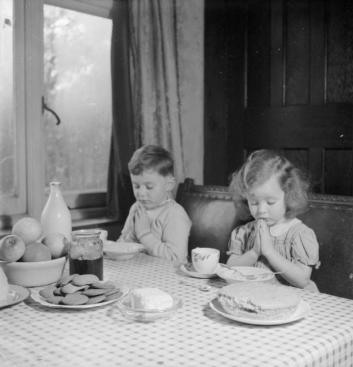
Tell them it is absolutely necessary that they use their hands to pray. They may hold them together if they wish or interlace their fingers. They can hold the hands of the person sitting beside them should they choose to. That is all well and good. But it is not what I am talking about.

Tell them to use their hands. To roll together a loaf of bread and lift a ladle full of tomato soup. Tell them to use their hands to drive a nail deep into a plank of wood, or to wipe the runny nose of someone much smaller than them. They need to know they are praying as they wash the dishes of someone they will go to bed angry with, and change the tire of someone they don’t know. When their mouths and their minds lose their words, their hands will continue the prayers.

Teach them to stop talking so much. Instead, tell them to start listening to the spaces between the words of their prayers. Here they will hear what the monks who have kneeled before the flicker of a candle feel. Here they will hear what mountain top lovers sitting on the hood of their car think as they watch the setting of a sun. Tell them to listen to themselves when they struggle to find the right words to pray, for it is in these searching moments they have said all they need to.

Teach them to listen. Don’t teach them to listen to you, that hasn’t worked yet and it probably won’t anytime soon. They can’t hear you over the noise of the world. They can’t hear anything. Invite them, instead, to listen to the sheer silence.


The Night Shift

clock_tower_clock_in_night

It’s 10:00 pm. Quitting time.

The workers lay their heads down on pillows, for the next shift begins any minute now. Their charges rest, arms above heads, surrendering to sleep.

Eleven PM. A truck roars by, proudly boasting its lack of a muffler. The child roars back through tears. A lullaby is sung.

Midnight. They pace up and down the hallway, astutely stepping over the board that creaks, sleepily humming the song to which they cannot remember the words. A tooth bursts through bone, a body is slowly soothed.

One AM. A monster is hiding under a bed and must be captured then returned to its rightful place, buried in the back of imaginations. The rescuer rubs the freed captive’s back, until soft snoring is heard.

Two AM. Slippers are tossed aside for shoes, blankets are grabbed, coats thrown over pajamas and the trip to the emergency room is swift. “It sounded like she couldn’t breathe,” they explain with hurried breath.

Three AM. Two warm bodies are tangled together in a rocking chair. A blue screen shines on them as one attempts to stay awake by reading tomorrow’s news. They listen to the sounds of the night, the whirr of helicopters, the rush of sirens, the squeals of cats who  parole the neighborhoods at this ungodly hour.

Four AM. A cough. A sneeze. A sniffle. A retch. Pajamas are changed, sheets are tossed aside for the morning’s labor. Faces and hands are wiped, and the rocking commences again. The night shift is stationary, yet long are the miles traversed in that wooden chair.

Five AM. They press their hands against the wall, breathing slow and deep, wondering if this time it is real. As the pain grows, the sound wakes their partners. They closely watch the clock, the seconds of the shift counting down. One post is ending, another about to begin.

Six AM. Night folds into day. The work does not end.

They kiss curly heads good-bye, and head off to their second jobs. They sit at home, sipping lukewarm coffee to the din of cartoons and stare at the day ahead. They count down the hours till they may return to the soft warmth of the bed, wondering if this time they will.

This is the night shift. Eventually, so the rumor goes, they will be allowed to sleep on the job. But the work, the true work, remains the same. Their allegiance to their post never waivers. They breathe in the daylight, they breathe in the star shine. On every shift, they stoke the fires, and the light that burns never goes out.

Always, always, they carry the torch.

Postpartum Depression on Mamalode

I’m excited (okay, fine, I’m nervous) to be sharing a piece I have on Mamalode today about living with postpartum depression after the birth of my first son today. I wanted to share because I feel like PPD is often portrayed as something that is the mother’s fault, like they are less of a mom for not enjoying motherhood more. But it simply isn’t true. PPD is no one’s fault, even though when you are in it, it doesn’t feel like that. 

Eventually, I began to fall apart. Before I had children, being tired meant staying up late to finish a paper in school, or feeling run down from a mild illness. I had never experienced sleep deprivation for days, not to mention weeks, on end. Thoughts flowed through my head like a faucet I could not turn off. This was a mistake. This will never get better. I’m not a good mother. My body still ached from the birth, and my soul began to ache along with it. I was in love, but I could not stop crying.

Read the rest of the story on Mamalode. Spoiler alert: it gets better. 

I’m Going to Quit Blogging

I’m going to quit blogging.

Not today, and probably not next week. But at some point, I will probably quit.

Maybe I’ll quit because I find a new and fulfilling career. Or perhaps I will decide to take up the violin, and dedicate my designated evening writing hours to entertaining the neighborhood cats with my own caterwauling. It’s possible I could quit because I have another kid, or heaven forbid, two, and completely run out of the little time I’ve managed squirrel away.

I’ll quit if I decide I simply don’t enjoy writing anymore. I don’t see this happening, but if it does, I’ll simply start on my next adventure. If the stars align just so, I might close up shop on my blog so that I can work on writing a book instead. Those cross country book tours probably take up a good bit of time, I assume. Not to mention the wining and dining with other famous authors and Nobel Laureates that would inevitably want to meet me. If that’s the case, then simply won’t have time to keep up with my blog.

I don’t yet know why I’m going to quit, but I know that at some point, I probably will. If I have it my way, it will be some time forty plus years from now when I lay my metaphorical pen down and decide it’s time to retire.

There are hundreds of good reasons to quit writing. But there is one reason that I won’t quit because of: I am not going to stop writing because I think I’m not good enough.

When I first started blogging, I made this promise to myself. I could quit for any reason I wanted – too busy, no longer enjoyable, etc., but I wasn’t going to allow myself to stop because I was afraid of being inadequate. And so far, truth be told, it’s the only reason that has ever tempted me.

Rejection is a facet of writing for publications that I have yet to fully embrace. Whenever I open an e-mail with a kindly worded “thanks, but no thanks,” or share an essay on Facebook that receives no reaction, it sends me back. Back to being in college, and constantly worrying that I wasn’t performing as well as my peers. Back to high school, when I wondered if I would ever be as well-liked as my much more popular friends. No matter how many essays are accepted, no matter how many compliments I receive, I still find myself wondering, “Am I any good? Am I just embarrassing myself out there? What right do I have to think I could become a writer?”

There are days when I know I am a strong writer, when I finish an essay and walk away from the computer smiling, knowing that I have just penned a winner. While the aforementioned rejection letters are ever present, the acceptance letters do come as well, bits of sun that attempt to outshine the shadow that the fear of failure casts. But as exciting as they are, I have to tell myself this – they don’t matter. I am not writing for acceptance. I am writing for me.

I’m not going to quit writing out of fear. I could be spilling nothing but drivel onto my pages and it would still be a good use of my time. The world certainly might not need to read my writings. It might not even want to read my writings. But I need to write.

At some point, I am going to quit writing. It’s inevitable. It won’t be today, and it probably won’t be tomorrow. But it won’t be because I think I’m not any good. No matter what rejection letters, internet trolls and the nagging voice inside of my head tell me, it’s just not worth it to quit. Not for that reason, anyway.

How to End Up on the Right Side of History

check_dam_barcelonnette

There are two ways to end up on the right side of history.

The first is simple. Be rich, powerful, and preferably in charge. You can write your own story this way. It helps to be of the right religion, correct color, and preferred gender. If you are none of those, see if you could still become rich or powerful anyway. Should you be unable to, please refer to the second method. If you do choose the first path, or rather, if the first path chooses you, you will be successful. At first, anyway. It is probable that you will end up on the right side of history, with your version written in stone.

If you choose the second option, look behind you. Survey the general course of history. You will start to notice humanity has been moving in a certain direction – forward. On a very slow and unsteady road, we have moved away from fear, away from slavery and oppression, away from injustice. Start walking down this path.

After you have walked for a little bit, you will realize you do not know where to head next. The way forward is murky and you are not sure which way to go. Here, you must stop. Listen to those walking beside you. When someone tells you they are hurting, believe them. Do not argue that it is not your fault, or assume it would be too great an inconvenience for you to stop and help. Walk with them for a while.

Eventually, you will need to take a break. Look at where you are. It is almost guaranteed that you will need to turn around. Do not be shocked at this, it was improbable that you would have happened to start out on the right path and then made only the correct choices along the way. Be wrong. It is unlikely you will ever be right if you have not ever been wrong. Admit that you were wrong, if not to others, then at least to yourself. Then keep walking forward.

If you look beside you, you will notice a stream has started to form. It is not a raging river, but a slow trickle. It is gaining momentum, but perhaps not moving as quickly as you would like. Head in the direction of that river.

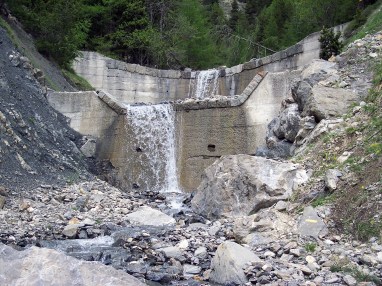
At this point, you, and the river, will be stopped. They will build stone walls to keep you from moving forward; they will dam you, and they will damn you. Here, you will feel as if you are waiting, waiting without even a purpose. You will feel trapped, helpless. But you have not actually been stopped.

Water breaks through stone. Whether it is small drops slowly eroding the rock away, or a gigantic river bursting through a dam, water will always eventually win. It will arrive, ready to give life. Ready to quench the longing of the thirsty, ready to ease the ache of a dry land.

At this point, it is likely you will no longer care where you are standing. You may realize it has never been about you. Yes, you may be happy that you can tell your grandchildren you were standing here when it happened. But it is not about that. It is about watching the people drink. And as you watch them, you will start to realize – you have been thirsty this whole time, too.

We are not our bodies

hold_my_hand

We are not our bodies.

It is one of the central themes of Christianity, the concept that the body and soul are not one in the same, but rather, we are more than the simple trappings we are housed in. Our bodies were built through the clunky process of evolution, and we eventually became who we are today – imperfect vessels acting as temples to hold something more. Our dictate to look past the body in order to see the person is is our calling and our struggle.

We are not our bodies.

We forget this daily. Our bodies, evolved to distrust the outsider, to protect ourselves, to flee or to fight, tell us to judge as if our very survival depends on it. Because, when we were simply another animal in this world, our survival did require it in a way that it does no longer. Our challenge now is to overcome this instinct to fear those who are different from us, to remember that we are not our bodies, and neither are they.

There are other themes to Christianity, of course – compassion, forgiveness, self-sacrifice, love, justice, mercy. But because the struggle to remember that we are not our bodies is something we have for so long publicly resisted, it bears its own mention.

We have tried for too long to force people back into their bodies, telling them to accept who God has made them. We have told people with darker skin they need to remain separated, and told women they need to remain silent. We have, at times, told children they were useless until they were working adults, and have told adults they are broken now that they have grown out of the innocence of children.

But we have been wrong. Evolution has grown the bodies that we wear; God has created our souls.

I am not my body. If I were, I would be nothing more than a pile of freckles, a bladder disorder I’d rather not talk about, and a bum ankle. That is not who I am. I am a mother, a lover, a friend, a believer, a peace-loving fighter who is so much more than simply a body. As we all are.

We are not our bodies. We are not our height, blood type, or skin color. We are not our struggles with obesity, alcoholism, depression. We are not our diabetes or our kidney disorders, our cancers or our beauty. These things have shaped and colored our souls, but they are not our entire selves.

And so, when someone confides to us that the body they are wearing does not fit, why do we continually try to stuff them back inside? Declaring to someone they must conform to the body they were born in, to behave in a way prescribed by the expectations society has set forth for their genitalia and their chromosomes is to go against the very belief that we are more than our bodies.

Christianity, at its core, is a call to love. And an element of love is trust. We need not fully understand what it is like to live in a body that is a different sex than its gender to trust in what a person says they need to do in order to live in peace.

To love someone is to give them the gift of freedom. Freedom to be who they are, unconditioned upon the body they were born into. Because we are not our bodies.

Dear Mom, I get it now

guess_how_much_i_love_you_cover_art

Dear Mom,

It’s been 365 days since I have thanked you last for being my mom.  That is, if I remembered to send a card last year. I hope I did. I might not have.

It’s been over a decade since we have lived in the same house, since you’ve washed my laundry and cooked me dinner. It’s been years since I have made you breakfast in bed for Mother’s Day, a tray of orange juice and Cheerios spilling over the side of a bowl. In the years before I left I started sleeping in well past the time you were up and unloading the dishwasher, and I no longer had school grown marigolds and hand painted picture frames to proudly give to you. Those were the years you were doing the heaviest lifting of motherhood, and the times I understood who you were the least.

I don’t live with you any more, but I still owe you my thanks. For answering my last minute baking questions that Google can’t solve. For listening me to complain about my baby who won’t sleep through the night. For face timing with my children when they are bored and restless waiting for Daddy to come home. They tak about you a lot. Thank you for the birthday presents and the visits, and for understanding when I moved far away. Thank you for loving my husband and for the prayers you send our way.

And thank you for all of those things I forgot to thank you for years ago. For the sleepless nights, for the homework help, for the braces, for the prom dresses. Thank you for singing me lullabies and reading me stories. Thank you for putting up with my eye rolling and back talking. I promise it was never personal.

When my son was born, someone gave us the book, “Guess How Much I Love You,” the story of a little rabbit who loves the big rabbit to the moon, and a big rabbit who loves the little one to the moon and back. “I hate this book,” I complained to my husband. “The big rabbit is always trying to one-up the little one. How loving is that?”

“But it’s true, isn’t it? We will always love our son more than he loves us,” he replied.

He was right, I’ve come to realize. Motherhood is a losing bargain. It is a self sacrificing unconditional love that is repaid with a tray of spilled Cheerios and a card I don’t remember to send every year.

And it is wonderful.

Thank you, for teaching me that.

Falling stars

When I was little, I was afraid of the stars. 

Hearing the term “falling stars,” I logically concluded that stars could fall out of the sky. After learning the fate of the dinosaurs, the possibility of a falling star joining us on earth became quite an active threat in my mind. To stare up at the stars was to stare at my eventual demise. 

Having since learned the correct term for a meteor, as well as discovering that NASA has an asteroid defense system, I can gaze at the stars in appreciation rather than fear. On nights that are warm and clear, I will find myself getting wrapped up in the grandeur and majesty of it all. If I lose myself in the moment, however, the enormity will overwhelm me and I will feel that old fear rising in me as I begin to question the things that scare me now. Life. Death. Infinity. Finity.  

Although I welcomed learning about asteroids, other enlightenments have not always been so positive. Education is a slow process which first involves creating a foundation of knowledge, and then a systematic dismantling of it as we learn the initial version of events was not quite accurate. To grow up is to watch the world slowly crumble around you. 

I have never enjoyed watching the stars fall. 

It happens gradually, subtly at first. You relearn the stories of our country, hearing the darker sides for the first time. Simple Sunday School truths do not seem to apply to the complicated world you live in. A beloved relative has a history you could have done without knowing about. A couple you know gets divorced. A child dies. You begin to realize the extent of the complexities, the pain, and the hunger of this world. We can ignore it, retreating back into preferred ignorance, or simply avoid staring at it for too long, lest we notice that one by one, the stars are falling down. 

I have always hated the discomfort of this process, even if I have welcomed the knowledge itself. With matters of faith, I struggled the most. Whenever someone who I had learned from later realized they were walking down a path they did not fully believe in, I felt shaken. I questioned the journey I was on, wondering if I only believed out of naïveté, or perhaps simple stubbornness.

When I was thirteen, I watched one of the most spectacular meteor showers the world would ever see. The stars flew across the sky, stretching from end to end before burning out their glory. The universe was forever changed, but at its core, it was all it had ever professed to be – grand. 

I no longer fear the falling stars. 

I have realized I believe in truth and in love, and most others do as well. There will be many times when we are wrong, sometimes devastatingly so, about the manifestations of these. 

These stars must fall away.

I doubt I will ever enjoy the process, but I have learned that an ever changing, ever churning world is to be savored. My place within it has not changed, though the stars may swirl about. I remain in love. 

Leather

The gray light of morning
Falls down as our soft bodies
Listen to the calling of tears,
A calling we have chosen,
And we remember when mornings were our own,
They were easier, and somehow less.
Now our tired bodies breathe in a
Fierce love.
They will grow
Breathe the same fire for themselves
Marveling that it could exist
And we will wonder
How they did not know.

The leather that binds us will crack.
We will stand together, mostly together,
At funeral homes
And I will watch you walk away from me.
Rosy cheeks tempt rose scented views
But the evidence of life is other.
The leather that binds us will crack.
But there will always have been love.
There will always have been love.