Mamalode

I’m excited to share that I have a piece up on Mamalode today. I usually find taking two kids to the grocery store something just short of terrifying, but usually there are one or two people there willing to help you out. I hope you check it out! 

She catches you staring, and smiles. “It gets easier,” she promises, looking bemused and relieved that her children no longer throw tantrums and wear diapers. You believe her, and hold on to that truth when moments later your toddler starts climbing on top of the car and your baby insists he wants to nurse right now and latches on while still seated in the cart. You wonder if she ever misses this; you wonder if you will.

The Women Who Smile at You at the Grocery Store on Mamalode. 

Hush, little baby.

51vm2buvworl-_sy300_

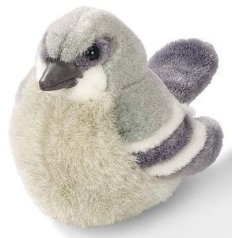
Hush, little baby, don’t say a word. Mama’s going to buy you a mockingbird.

We sit on the couch, or rather, I sit while he bounces. Suddenly, he is not there. I see only his legs in the air; his body is falling down the other side. There is a crash and the tears are instantaneous.

And if that mockingbird don’t sing, Mama’s going to buy you a diamond ring.

My mind races as mothers do, lapping dozens of possibilities before I make it around the couch. Did he break his neck? Will there be blood? Broken arm? Concussion? Can he move?

And if that diamond ring turns brass, Mama’s going to buy you a looking glass.

I cuddle him in my lap. He is larger than he was when I first sang him this song, and his legs hang off of mine. His face is red and he looks into my eyes as he screams. There are no injuries, but I hold him close.

And if that look glass gets broke, Mama’s going to buy you a billy goat.

This was the song that my mother sang to me when I couldn’t fall asleep on nights that seemed to be extra black. Now I wonder who would hand a baby a diamond ring, why the promise of multiple carts would soothe a crying child. But it never failed to do so.

And if that billy goat won’t pull, Mama’s going to buy you a cart and bull.

When he was little, he was not easily soothed by the things that are meant to soothe babies. But eventually, after hours of failed attempts, this song begun to work on my infant son as well. His cries would slow, then cease, and he would stare at me, listening.

And if that cart and bull fall over, Mama’s going to buy you a dog named Rover.

His back hurts, he gasps between the sobs. I snuggle him closer, reminding him, “this is why we don’t jump on the couch.” I immediately regret saying this. In this moment, he realizes that. Tomorrow, he will have forgotten both my admonishment and the time he fell headfirst over the back of the couch, and return to his wild ways. Right now, however, he only needs someone to hold him as he cries.

And if that dog named Rover won’t bark, Mama’s going to buy you a horse and cart.

He pops up. “Mama,” he says with utter seriousness.”It was like I was flying,” he says, beginning to grin. “It hurt when I landed, but it was fun flying down.”

And if that horse and cart fall down, you’ll still be the sweetest baby in town.

Beautiful, useful

For the last four years, my body has not been my own. I have been its landlord, renting it out to temporary tenants who needed a place to start their lives. I have held babies in my belly as they grew and in my arms as they nursed, every day for the last four years. For nearly fifteen hundred days, I have awoken to the cry of someone thirsting for milk, or fallen asleep as they nestled next to the beating of my heart. I have been their first home.

When I was younger, I was neither particularly displeased nor pleased  with my body. I was, however, always most comfortable when the cool breeze of fall meant I could wrap myself in jeans and sweaters. I have never fully outgrown the feeling that I was all knees and elbows, topped with a mess of red hair. The exposure of that southern summers necessitated seemed to amplify this feeling. The freckles that danced on my pale Irish skin were emboldened by any hint of sunlight, and the shorts and sandals, to me at least, highlighted my awkward adolescent legs. I was always glad when Semptember, and long sleeves, returned.

Nowadays, I have little need, nor ability to cover myself. I often joke that there are few people in the state of Montana who haven’t see my breasts. I have nursed while hiking in the park, during Sunday mass, in the Capitol building before giving testimony, while the dentist cleaned my son’s teeth. Hiding my body now seems like a silly inconvenience. My legs have turned into a lap to be sat on, my hair has been twirled by sticky fingers, my freckled cheeks have been kissed by little lips. For the last four years, my body has been loved.

It is a funny thing, now that I consider my body as something to be useful, rather than something to be beautiful, it has become a bit more of both.


My Son’s First Memory

thumbPH41D5WB (2).jpg

Now things are really going to start to matter. My son, three years old and plowing headstrong to four, is old enough to start remembering.

I’m not talking about remembering that time we to the park last week, or how I told him he could have a few jelly beans after naptime (even though I hoped he would forget). I’m talking real memories. First memories. The kind of memories that the girl you’ve gone on four or five dates with starts to question you about. “What’s your earliest childhood memory?” she asks, swirling the wine in her glass, trying to find out who you are beneath the scruffy beard and date night sweater.

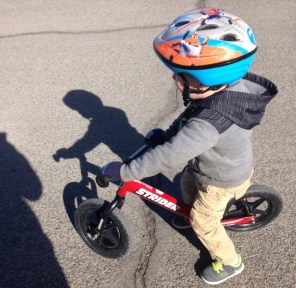
I’ve started wondering which moment it is going to be. Will it be today, falling off his bike when an older kid ran into him, crying as all the parents rushed over to help? How the dirt covered his pants and I held him as he shuddered, and walked beside him as he bravely biked back towards his dad? Will it be building sandcastles on the beach with his grandfather, watching imagination turn into creation? Or maybe it will be one of the simple moments throughout the day, the ones I have already forgotten. Sitting on the couch reading books, splashing in the bath, eating cereal with daddy in the morning.

Mine is laying my bed in our first house, warm sunlight flowing through the window as I woke up. That, or having the chicken pox. I prefer to think it was the first.

“Why don’t I remember when I was a baby?” he asked me today after listening to me tell tales about his earliest days. “Nobody remembers when they are a baby,” I assured him. “But mommies do. We will always remember.”

The words rang untrue as I said them. There are no guarantees that I will be able to keep those promises we make to never forget, to remember until the day I die. I have watched both my grandmothers struggle to remember, watched as the vaults that housed lifetimes of memories were slowly robbed.

I don’t know which moment will be the one that stay with him, or if it has already passed. Even if, by chance, it’s one of the good ones, I have no guarantee how long it will last, how long either of us will get to keep it, before, like the sandcastles he built with his grandfather, time will come to reclaim them.

Just in case, I think I will tell him “I love you” a few extra times tomorrow. You never know what will stick.


April

prevail-3

Spring is not the season of new life. It is the season of death.

I was reminded of this yesterday while I spent the day working in the garden. Rather than ushering new seedlings into being, I was elbow deep in the detritus that filled our yard. My husband removed an old cherry tree that had not survived winters before. I tore out weeds and the remains of the flowers we loved last year. We were surrounded by things that had once lived and died.

Every April, this truth is apparent.

I was a junior in college, eating lunch with a friend. She asked if I had heard the news, that someone had been shot that morning at the school where her fiancé attended. The school whose football team I had always rooted for, the one where nearly all of my high school friends attended, the one in the town where I had gone to church. While we spoke, bullets had already torn through bodies and through the community. Blood had flown and the tears did as well. They would not stop for days, for weeks, for lifetimes. It was enough to water all of the gardens that had been planted in only hope weeks before.

We parted and I called my mother to ask if she had heard the news. “Eight.” She said. “Eight people have been shot.” We hung up, and I began to cry. Standing in the middle of the student center, staring at the TVs that showed the news, listening to a reporter confirm one death and a possible second at the university in Blacksburg, I cried. People stopped to watch, turning from the TVs to me and back again. I tried to explain through the tears. A stranger stopped, and put her arm around me, offering me a tissue. She stood with me, watching as the news report changed, and the numbers on the screen began to tick upwards.

The bathroom offered sanctuary, and I collected myself in there, listening to another girl sob in the bathroom stall. She kept telling the person on the other end of the phone call she loved her. She came out, and we hugged as she told me her sister had been working on campus. Mine had been as well that day, I learned later that night.

A friend took me in, and we watched the news. Ten. Twenty two. Thirty. The numbers no longer mattered. I texted friends from home, learning one by one they were safe. Thirty two. My body shook until it hurt, until the pain felt good because it was real.

I waited for the list. It came, and I knew one of the names on it, a former classmate whom I had run into on campus the last time I was home a few months earlier. He had smiled and we chatted; he waved goodbye. My sisters knew others.

Mistakenly, I attended class the next day. The professor placed a test in front of me, a test I had forgotten about. I turned it in blank. I did not attend school for the rest of the week. For the rest of that spring, I sat in my own French class staring at the door, wondering what would happen if evil walked in.

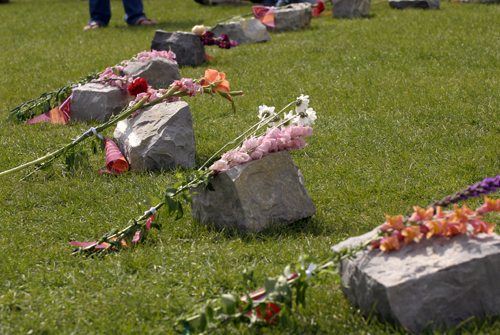
A hometown should remain as it does in one’s childhood memories. Immune to new construction that draws its face unrecognizable. Immune to tragedies. When I drove home later that spring, it looked much the same, except there were more flowers this time. The flowers were strung into wreaths, laid against stones, resting by candles. The town shone with flowers.

Spring is not the season of new life. It is the season of struggle, of a battle between life and the force that continually attempts to conquer it.         

Now I live on the other side of the country, in a state where people know the school’s name because of football and because of the massacre, although they only ever mention the first. I live in mountains where the storms of winter do not cease in spring. Occasionally a cold and cruel snow will fall down, temporarily halting the birth of the world.

Life will eventually win, it is true. Life persists, it insists upon that. Eventually the tumult of April will pass and the world will bloom in full. The cycle will not end there, cold will come again and spring will eventually emerge victorious once more. Life struggles through pain. Children are born to the sound of their mother’s screams; flowers burst out of a land that once was frozen.

Pain never ends. Neither does life.
Home Base

image“CRAAAAACK!!”

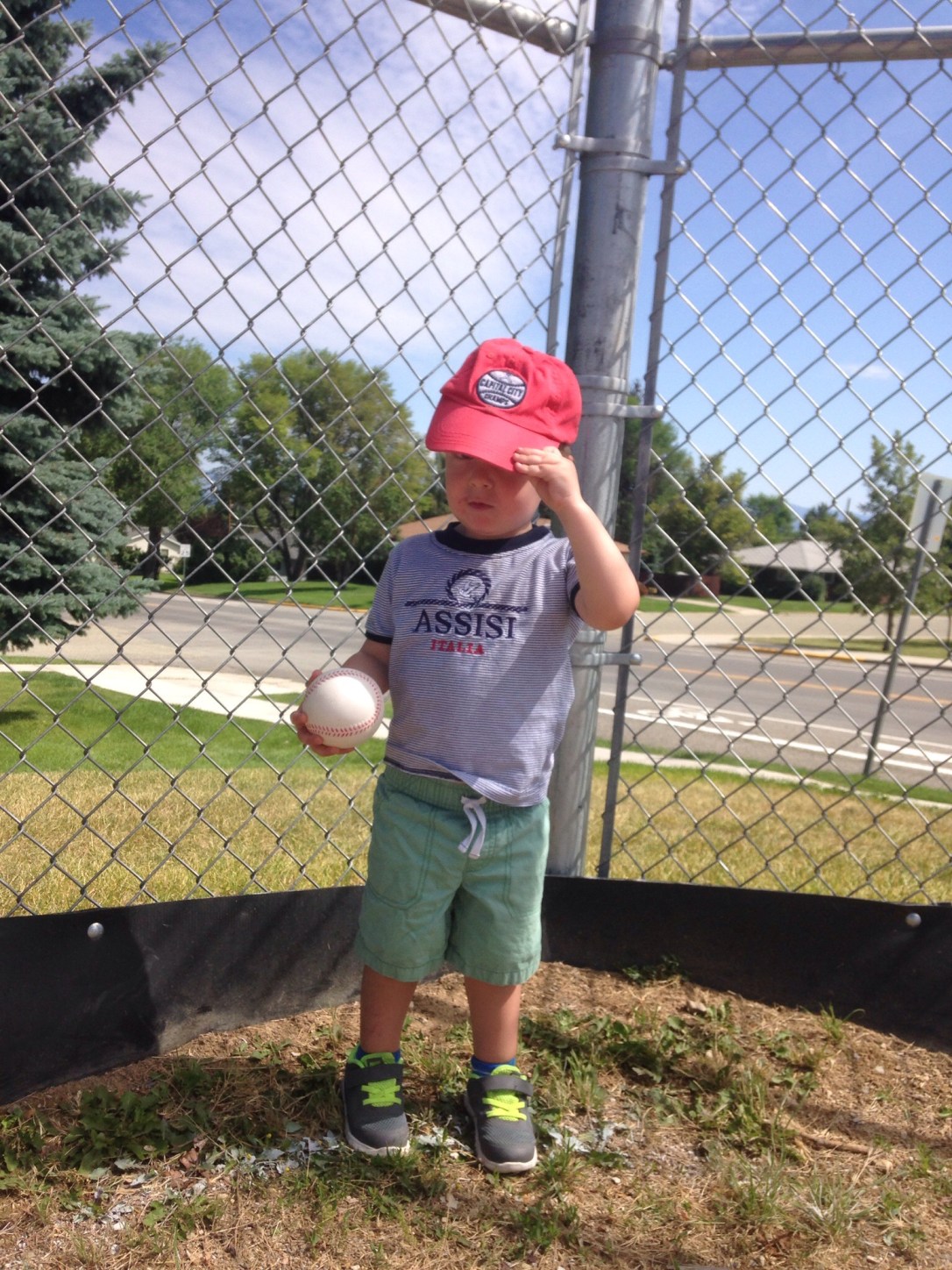
There is something uniquely pleasing about the sound of a bat and a baseball meeting. It is a sound full of both satisfaction and expectation. A sound that I, even as someone who has never hit a home run, can appreciate. In our backyard I listen as my boys search after that sound, haphazardly swinging plastic bats towards balls perched atop tees. The ball shoots off and they run around the yard, giggling with hands held aloft, before collapsing onto my lap.

My own baseball career was short lived. For one summer of my childhood, I pulled my rusty red hair into a pony tail, shaded my freckled face with a baseball cap, checked out books from the library on how to throw the perfect pitch, and watched A League of their Own on repeat. I was fascinated by the women who could throw a fastball while sporting red lipstick and wear skirts while fighting the prejudice and the Axis powers. I was smitten. I wanted to play ball; I wanted to be a pitcher.

When it became apparent that my smaller than half-pint frame would not hold up well against the girls who were already wearing braces and sports bras, I was pulled off the team appropriate for my age group and relegated to my little sister’s coach pitch team. My dreams of becoming Kit Keller evaporated instantly, although my lack of athletic skills would have caused them to disappear regardless.

We were deep into the season, and I had yet to tap into my own inner Rockford Peach. I stood on home base, vainly attempting to hold a heavy bat above my shoulders.  Strike one happened instantly, followed quickly by the second. The dusty light of dusk was beginning to weigh down on me, hanging as heavy as my spirits. Strike three. One of the coaches pointed out that the stadium lights had only just begun to flicker on, and perhaps I should be given another go. Strike four.

The rules of little league are merciful to the marginally athletic, yet merciless to those who are not talented in the least. Our small county club allowed youngsters an extra hit if they had gotten a touch on the ball. A parent called out from the stands, “She got a touch on that last one! Give her one more chance!”

Please don’t. I begged internally. Just let me go sit down. Strike five. Finally the adults realized no one would ever make it home for dinner if they waited until I got a hit, and let me return to the bench.

My baseball career may have ended that season, but I now fill a different role in the game.

I sit on the couch talking to another mother as her children play with mine. My youngest ventures into the fray of toddlers, and comes running quickly back, burying his head in my knees. One touch and he is off again, ready to join their ranks. My oldest dives off a piece of furniture that he has been expressly forbidden from diving off of, and after the ensuing injury, he climbs into my lap and releases his tears. Minutes later he jumps down, the injury forgotten, ready to play again.

I am their home base. They have moved from my belly to my breast, from my lap to holding hands across parking lots. From there I will move to a number on speed dial, the one who cooks them Thanksgiving dinner on school breaks. Their laps around the bases will grow longer, the time before touching base at home growing.

I left home, like most people, when it was time for me to get an education, seek adventure, fall in love. Small children who need me, money that must pay bills dictate that I do not return as often as I would like, but the need to touch base remains nonetheless. I have heard it said that if one creates a loving home, children will feel secure to venture out from it. I don’t know if that is true, perhaps because I don’t know if I want it to be true. I occasionally wonder if they will follow in my footsteps and move across the country, or across the world.

The fame and glory of being an athlete will never be mine. Instead I am a scuffed and dirty plate, where little leaguers stand awaiting the crack of the bat, and where they run home to at the end of it all. This is where I belong. Here, I am home.

The things you talk about

When you are young, and in love, you talk about yourself. How you like beer and hot wings, the sound of running water, taking naps outside, the treehouse you had growing up, the time your basketball team won the tournament, that your favorite books include Les Miserables and a Prayer for Owen Meany. You tell each other about the things, the food, the trips, the memories, the scars, that have made you.

When you are dating, and in love, you talk about big ideas. About politics, the problems and solutions which are ever changing the world. You play each other your favorite songs and tell each other why you love them. You aren’t talking about the songs. You talk about the problems with the NCAA and climate change. You stay up all hours of the night discussing what you believe in, the moon and stars circling above as you wonder aloud about the heavens.

When you have both agreed that you are, in fact, in love, you talk about the future. About traveling to Greece and Australia. You walk down the street and point out houses you would like to buy if you had more than ten dollars to your name. Green ones with large wooden pillars outside the front door and a porch with rocking chairs. You talk about careers and where you will hang your diploma after it’s framed. You check the forecast and talk about how you might be getting a cold and what basketball game is on tonight. You ask each other how many bedrooms that green house you walked by once has and if there would be children to fill it, and if so, how many.

When the future has arrived, and you are still in love, you talk about your day. About how work was, and whether or not you are out of milk. You talk about deductibles and humidifiers. You wonder where your child learned the phrase poopy head. You talk about how lucky you are and whose turn it is to sweep the kitchen. One of you reminds each other about the lunar eclipse tonight. You ask could you please turn the volume up on the TV as you snuggle in closer. You talk about fears and what you would like for dinner. You describe the way your kid smiles in more detail than is necessary.

You still talk about the other things too, the big ideas and the future. When you are out on dates, kids tucked safely into bed while grandparents watch them, you talk about politics and trips to Argentina, how you still need to get your diplomas framed and the books you are reading.

But you no longer talk about yourself as much. There is no need. You are known. You are loved.

My to-do list for today

  1. Conquer the mountain of laundry.
  2. Wonder if there is a way to keep clothes permanently clean.
  3. Research disposable children’s clothing.
  4. Step on a minimum of two hot wheels and/or Legos.
  5. Plan interesting educational sensory activities for children.
  6. Decide said children really need more alone time to develop independence. Spend next thirty minutes trying to evade them while getting dressed.
  7. Spend next twenty minutes cleaning up alone time induced messes.
  8. Take children on a walk. Spend ten minutes packing up various snacks and drinks for them on the walk, even though you will be the only one exercising.
  9. Read at least three parenting articles that will make you feel guilty about your parenting.
  10. Feel guilty that you spend so much time feeling guilty.
  11. Create a sub to-do list of things you will accomplish during children’s naptime: mopping floors, folding laundry, finish that book, send e-mails.
  12. Feed children lunch, put them down for their naps.
  13. Collapse in a heap of exhaustion on couch and wonder how you ever thought you were going to get something done during naptime.
  14. FaceTime with your mother when one child wakes up early from his nap. Marvel at how she raised three successful daughters.
  15. Forget to tell her. Complain about amount of laundry instead.
  16. Explain the rotation of the earth and inner workings of the solar system to an inquisitive three year old who asked why it is daytime. Realize he just meant why is daddy not home yet.
  17. Mentally spend tax return on new spring wardrobe.
  18. Remember that you have yet to file tax return. Think that maybe you should do that during naptime tomorrow. Realize that would jinx said naptime, ensuring no one sleeps. Mentally return spring wardrobe to the store.
  19. Show off your latest acquired skill: reading children’s books with your eyes closed.
  20. Remind children of house rules: Tackle gently. Ask before tackling. No tackling from behind. If he’s crying, no more tackling. Okay, no more tackling. Please stop tackling. I’m serious NO TACKLING.
  21. Decide you want spaghetti for dinner.
  22. Check the pantry for spaghetti.
  23. Check the cupboard for spaghetti.
  24. Check the pantry for spaghetti.
  25. Realize husband could pick it up on way home from work. Debate which you want more: spaghetti for dinner, or your husband to come home twenty minutes sooner.
  26. Decide eggs for dinner sounds just fine.
  27. Brag to Facebook that you managed to cross every item off of your to-do list today. Bask in success.

The Trick Season

Nature PhotographyThe sun is shining and its touches of gold have begun to awaken the earth. Dormant blades of grass rise and stretch towards the sun, trees shake out their buds, and the blue sky, having survived another gray winter, waves proudly above.

Yet the air is cold. The wind circles around you, tauntingly reminding you that it will not be spring for many more weeks. And when spring arrives, it will not be the soft, delicate season we always imagine it to be. Bunnies will hop about the yard, yes, and crocuses will grace the edges of sidewalks, but the growth of new life is never be as peaceful as we hope. It is the trick season, the one that draws us in with the promise of sunshine and warmth, peace and beauty. We forget about the storms it brings, cold winds on sunny days and rains that soak the earth. The snow promises to stay aloft in fortressed mountains, yet strange weather fall from the sky and we watch daffodils turn white with hail.

“I have raindrops in my eyes, Mama,” my toddler sobbed to me, as his big emotions swelled and burst out of him, “can you make them go away?”. The storms that come in the spring years of life are sudden and unpredictable. Some days a cloud hovers over us and we camp out at home, watching the rain pour down the windows, waiting for the storm to pass. Other days are nothing but sunshine and smiles, the days that we will write into our memory books and carry with us until our deathbeds. And yet even on these days, the sun will start to shower and I will watch it glisten through the drops, wondering where this cloud is coming from. A scraped knee, a missed nap, a brother playing with the favored toy, a daddy who must go to work, a papa who lives too far away, a mother who says no – these are the torments of youth.

Raising two toddlers is like lassoing a whirlwind. They swirl about me, kicking up dust and dirt, their laughter thundering throughout the house. They are growing, their bodies shooting up and bursting forth. Their minds are beginning to buzz and the energy that has brewed within now flows freely, sometimes in smiles and joy, sometimes in pain and tears. This morning I held my son as he sobbed; the despair he felt at a slight reprimand had not been what I forecasted. His body dissolved into mine, and as I sang, the rain, rain eventually did go away. I wondered when it would return.

This is the trick season, the one rife with sweetness and beauty. The one with cold winds and sudden storms. Growth is beautiful, but it is not easy. The renewal of a barren landscape, the journey from infant to child – perhaps the real exquisiteness is not in the delicate flowers or sweet kisses, but in the transformation itself. Perhaps, this is the trick.

Spring Cleaning

It’s that time of year again. My muscles ache from spending hours curled up on a couch under a blanket, and the crush of the walls that have kept warm for the last several months becomes stifling. The inanimate occupants of my house seemed to have multiplied and I long to escape from the stacks, piles, and heaps of stuff. It is time to spring clean.

In the past this urge over took me once a year and I would make a day of it, finishing by dinner and relaxing in a sparkling clean abode. Now that the actual animate occupants of my house have multiplied, I chip away at the tasks in chunks over the course of a month. I clean the refrigerator one day, a drawer the next. Some days I am too tired and only have the energy to clean out my Netflix queue after the children have fallen asleep. Other days I sneak away while my husband entertains them and spend hours delving into the depths of a closet, hoping to emerge in a cleaner, more organized Narnia.

I am not a meticulous housekeeper, but I enjoy the spring clean. I find journals I kept in high school and college, and listen to a younger me talk about crushes I once had on boys who are now men, who work in auto shops and travel the globe. I find scraps of fabric from projects I have finished – baby quilts, Christmas stockings. Under the couch cushions there are wrappers from snacks we haven’t purchased in months, and hats that my sons have long since outgrown. There are lost toys that will be treasured once again, and missing socks whose partner I bid adieu to months before. I find text books whose content I can’t remember, yet hold onto, perhaps in case anyone ever telephones me with an urgent question about non-Western perceptions of infectious diseases, or perhaps because I want to remember that I once read them. I find dresses I haven’t worn in years, originally purchased because they bared little cleavage, and shelved because they did not permit nurslings easy access my breasts. I wonder if they are even in style anymore, or if the slacks I wore when I went to work would even fit the body of a mother.

There are some things I know I will not find. I will not find one of the earrings my husband gave to me on the first Christmas we spent together, although each time we travel, I will search every corner of the suitcase I know I left it in. I will not find the journal that I kept on my summer abroad, detailing adventures I knew I wanted to remember, tucking souvenirs behind the cover. I have not seen it in the last six moves I have made, but I haven’t stopped looking. I know I will not find the object to ever be as important as the memory, and find myself saying goodbye to once cherished mementos that have now morphed into nothing more than dust collectors. I will not find out what would have happened if I had broken up with my college boyfriend and dated one of those crushes I journaled about instead. Nor will I find what would have happened if I hadn’t gotten sick when I was 24, or if I hadn’t have quit my job after my second son was born. I will not find out what would have happened if I had not had the courage to step on an airplane and move away from everything I new and loved to embark on a new adventure. I don’t think I want to.

Each year, I take the different versions of me that I have lived down from the shelves and dust them off, one by one. I retire the ones that I have long since outgrown, and save some versions for the future, in case I decide to head that direction once again. I take inventory of my house, of my life. It will not last – drawers will become cluttered once again and a muddy pile of shoes will grow at the bottom of the closet once more. And I will wonder once again what I am doing and who do I want to be. I have been a student, an employee, a mother, a writer, a baker, a believer, someone who has dreamed of adventure, of family, of love. My life may have changed, but I have not.